








- Who: Alphabet Inc. (parent of Google), with Berkshire Hathaway as anchor investor
- What: Record equity capital raise of $84.75 billion — upsized from initial $80 billion target
- When: June 1, 2026; announced and priced in early June 2026
- Where: Global — US capital markets; funds to build AI data centers globally
- Why: Fund $180–$190 billion in 2026 capex; AI compute and data center infrastructure
- Impact: Largest corporate equity raise in history; 2027 capex expected to rise significantly further
Key Takeaways
- Alphabet raised $84.75 billion in equity capital — upsized from its initial $80 billion target.
- Berkshire Hathaway agreed to invest $10 billion via private placement — Warren Buffett’s first major tech bet in years.
- The raise includes a $40 billion at-the-market program, $30 billion in underwritten offerings, and the $10B Berkshire deal.
- Alphabet’s 2026 capital expenditure is projected at $180–$190 billion, with 2027 capex expected to rise further.
- The funds will go toward scaling AI infrastructure, compute capacity, and global data centers.
Alphabet raised $84.75 billion in equity capital — the largest corporate equity raise in history — to fund AI infrastructure and global data centers. Berkshire Hathaway backed the deal with a $10 billion private placement, signalling institutional confidence in the AI build-out thesis.
What Happened?
Alphabet, the parent company of Google, announced on June 1, 2026, a landmark equity capital raise that quickly became the largest in corporate history. The total raise, initially targeting $80 billion, was upsized to $84.75 billion as institutional demand exceeded expectations. The transaction structure combined three components: a $40 billion at-the-market (ATM) program to sell shares directly into the open market beginning in Q3 2026, a $30 billion underwritten offering of shares and mandatory convertible preferred stock, and a $10 billion private placement with Berkshire Hathaway Inc.
The Berkshire participation was particularly notable. Warren Buffett’s investment conglomerate has historically been cautious about technology stocks, with Apple being its most prominent exception. A $10 billion direct stake in Alphabet’s equity raise signals that institutional investors at the highest level are treating AI infrastructure investment not as a speculative bet but as a long-duration capital allocation decision comparable to energy or rail infrastructure.
Alphabet stated that the net proceeds will be used for general corporate purposes, with capital expenditures explicitly identified as the primary destination. The company raised its 2026 capex guidance to $180–$190 billion, one of the largest single-year capital investment programs ever announced by any corporation globally, and flagged that 2027 capex would rise further.
Why It Matters
The Alphabet raise is significant for the global business landscape in several interconnected ways. First, it demonstrates that the AI infrastructure build-out is being treated as a multi-decade investment cycle, not a quarterly spending decision. A $180–$190 billion capex year, with a pledge that 2027 spending will be even higher, implies that Alphabet’s management sees AI compute as an asset class — one that must be built now to be competitive in the AI era that is arriving over the next 3–5 years.
Second, the transaction’s reception — demand strong enough to upsize from $80 billion to $84.75 billion — tells a story about global capital markets. Institutional investors absorbed the largest equity offering in history in a matter of days. This signals that markets view AI infrastructure spending not as value destruction but as value creation, even at the cost of near-term earnings dilution.
Third, the Berkshire Hathaway anchor validates a long-standing debate: whether AI capex cycles will produce durable returns. Buffett’s endorsement — even if indirect through a private placement — suggests that one of the most rigorous return-on-capital investors in history believes the AI compute buildout will generate long-term economic value rather than become a stranded asset.
For global business leaders and investors, the Alphabet raise sets a precedent. If the world’s largest advertising and AI company can raise $84.75 billion in equity while projecting $180–$190 billion in annual capex, the message is that the AI infrastructure race is a commitment measured in hundreds of billions of dollars — and that those who underspend risk falling irreversibly behind.
Expert Analysis
AI Infrastructure as the New Industrial Base
The scale of Alphabet’s capital raise reflects a broader thesis that AI compute is becoming the foundational infrastructure of the global economy — analogous to electricity grids in the 20th century or rail networks in the 19th. When a company projects $180–$190 billion in annual capital expenditure, it is not building capacity for a product cycle; it is building capacity for a platform that will underpin global economic activity for decades.
Alphabet’s S-1 filing with the SEC for the offering explicitly cited “AI infrastructure and compute” as the use of proceeds. The company’s existing AI assets — Google DeepMind, Gemini models, Google Cloud’s AI services, and Waymo — require massive compute to maintain competitive parity with Microsoft/OpenAI and Amazon/Anthropic. The alternative to this level of spending is not stability — it is competitive obsolescence.
Berkshire’s Bet: Capital Discipline Meets AI
Berkshire Hathaway’s $10 billion private placement deserves its own analysis. Buffett’s investment philosophy centres on businesses with durable competitive moats, pricing power, and consistent returns on capital. His willingness to commit $10 billion to Alphabet’s AI infrastructure raise implies that he sees Google’s search, advertising, and cloud monopoly as durable enough to fund the AI transition without permanent value destruction — and that the AI assets Alphabet is building will extend rather than replace its existing competitive advantages.
Market Impact
Tech Sector Rally
Alphabet’s capital raise has contributed directly to the S&P 500’s eleven all-time closing highs in June 2026. Technology sector returns reached 16% in the month, with AI infrastructure suppliers — semiconductors, data centre equipment, and cooling systems — leading the gains. Dell Technologies more than doubled in market capitalization, and Micron Technology joined the trillion-dollar market cap club on the back of AI memory demand that Alphabet’s spending directly drives.
For Indian technology companies, the Alphabet capex commitment is significant. TCS, Infosys, and Wipro are major Google Cloud implementation partners. As Alphabet scales its AI infrastructure, demand for cloud migration, AI integration, and enterprise software services — domains where Indian IT companies hold leadership — will grow correspondingly. The Alphabet raise is, in an indirect but real sense, a positive signal for Indian IT sector earnings in FY27.
Global Ripple Effects
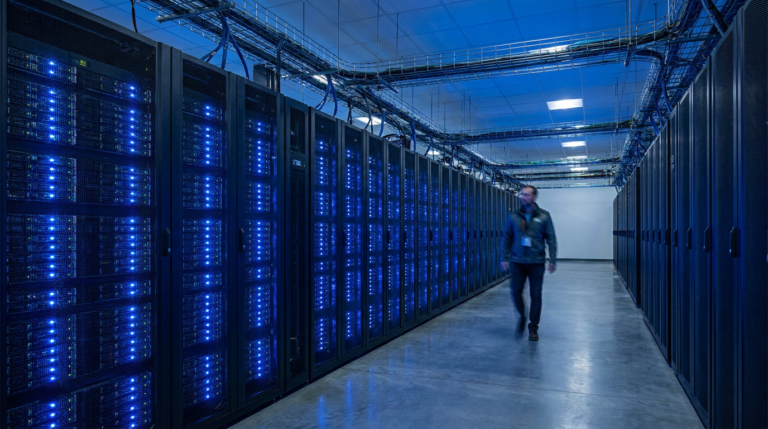
Alphabet’s $180–$190 billion 2026 capex will flow through hundreds of supply chains: Nvidia GPU orders, Intel and AMD server chip purchases, construction contracts for data centres across Asia, Europe, and North America, and energy contracts to power those centres. Each dollar of Alphabet capex generates multiplier effects across the global economy — a point that has not been lost on equity analysts who track data centre REITs, utilities, and semiconductor companies.
Frequently Asked Questions
Why did Alphabet raise $84.75 billion in equity?
Alphabet raised $84.75 billion to fund its AI infrastructure build-out, which requires $180–$190 billion in capital expenditure in 2026 alone. Building AI compute infrastructure — data centres, GPUs, cooling systems, and global network capacity — requires upfront capital that exceeds even Alphabet’s substantial operating cash flow. The equity raise provides firepower to scale AI infrastructure without excessive leverage.
Why did Berkshire Hathaway invest $10 billion in Alphabet?
Berkshire Hathaway’s $10 billion private placement in Alphabet reflects Warren Buffett’s conviction that Google’s AI infrastructure investment will produce durable long-term returns. Alphabet has a dominant position in search, advertising, and cloud — and the AI infrastructure it is building will reinforce those advantages. Berkshire’s participation also provided credibility that helped the wider $84.75 billion raise succeed at scale.
How does Alphabet’s capex plan compare to peers?
Alphabet’s $180–$190 billion 2026 capex is among the highest ever for a single company in a single year. Microsoft is spending approximately $80 billion, Meta approximately $65 billion, and Amazon over $100 billion on AI infrastructure in 2026. Alphabet’s raise positions it at the top of the AI capex cycle — a level of commitment that reflects its determination to close any gap with Microsoft/OpenAI in enterprise AI services.
What will Alphabet build with the capital?
The capital will fund AI compute infrastructure: GPU clusters, AI data centres in multiple geographies, network connectivity, and R&D for next-generation AI models through Google DeepMind. A portion will also support Waymo’s autonomous vehicle operations and Google Cloud’s AI services expansion — both capital-intensive businesses that require sustained investment to maintain competitive positions.
Conclusion
Alphabet’s $84.75 billion equity capital raise is more than a financing transaction — it is a strategic declaration that the AI infrastructure race is real, permanent, and winner-takes-most. The upsized deal, the Berkshire anchor, and the $180–$190 billion capex guidance together send a clear signal: the companies investing heavily in AI compute today are building the infrastructure that will determine global business competitiveness for the next decade. For investors, the question is no longer whether AI infrastructure spending will happen — it is which companies and supply chains will benefit most from the capital flowing into this build-out at unprecedented scale.
Sources
- Alphabet Investor Relations: Alphabet Announces $80 Billion Equity Capital Raise
- CNBC: Alphabet plans to raise $80 billion from stock sales
- Bloomberg: Alphabet’s $80 Billion AI Raise Gets $10 Billion Berkshire Bet
This article is for informational purposes only and does not constitute financial or investment advice.