









- Who: Dell Technologies and Micron Technology — two of the world’s largest IT infrastructure and semiconductor companies
- What: Dell’s AI server revenue doubled to $9B in FY26; Micron projects semiconductor market will reach $1 trillion by 2030
- When: FY26 results and market projections published in April–May 2026
- Where: Global IT infrastructure market; key markets are North America, Asia-Pacific, and Europe
- Why: Unprecedented AI data centre buildout by hyperscalers (Microsoft, Google, Amazon, Meta)
- Impact: Global IT infrastructure spending to reach $1.38 trillion in 2026, up 23% year-on-year
Key Takeaways
- Dell’s AI server revenue reached $9 billion in FY26 — double the $4.5 billion of FY25.
- Micron forecasts the global semiconductor market will reach $1 trillion by 2030, up from $614 billion in 2025.
- Dell’s AI server backlog stands at $4.1 billion — revenue visibility for the next 2–3 quarters.
- Global data centre investment in 2026 is projected at $415 billion — the largest single-year investment in tech infrastructure history.
- India’s data centre capacity to triple to 3,000 MW by 2027, with $10 billion in committed investment.
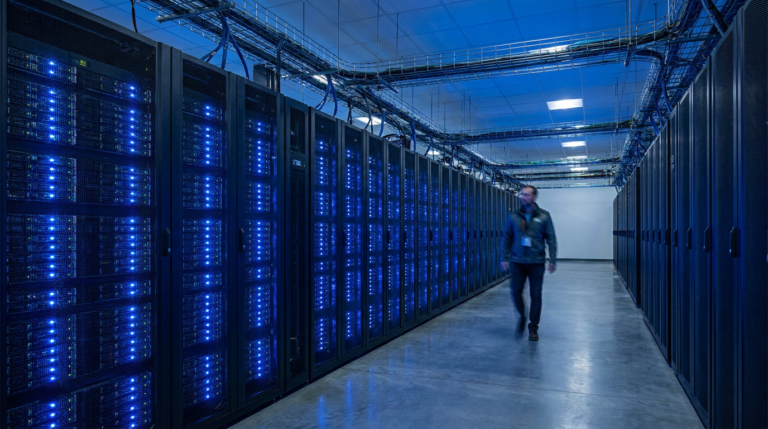
Dell’s AI server revenue doubled to $9 billion in FY26, driven by hyperscaler orders for AI infrastructure — particularly Nvidia GPU-based servers for large language model training and inference workloads. The global data centre investment of $415 billion in 2026 — the largest in history — is the demand driver. Micron’s $1 trillion semiconductor market forecast by 2030 reflects the same fundamental trend: AI is creating demand for compute and memory at a scale that dwarfs previous technology cycles.
What Happened?
Dell Technologies reported FY26 results in April 2026 showing that its AI server revenue — driven by orders for Nvidia GPU-based servers and AI infrastructure hardware — reached $9 billion for the full year, more than double the $4.5 billion of FY25. Dell’s AI server backlog of $4.1 billion at the end of FY26 provides visibility into at least 2–3 quarters of continued AI-driven revenue. Dell’s Infrastructure Solutions Group (ISG) — which includes servers, storage, and networking — now generates 68% of Dell’s total revenue, up from 55% in FY24, as AI infrastructure demand has fundamentally rebalanced Dell’s business.
Micron Technology, the world’s third-largest semiconductor company by revenue, published its market outlook in May 2026 projecting that the global semiconductor market — valued at approximately $614 billion in 2025 — will reach $1 trillion by 2030. The growth will be driven almost entirely by AI: Micron projects that AI-related memory demand (HBM, LPDDR5X, and data centre DRAM) will represent 35% of total semiconductor revenue by 2030, up from 12% in 2025. Micron is investing $50 billion in new US fab capacity to meet this demand, following its previously announced $100 billion 10-year investment plan in New York.
Why It Matters
Dell’s doubling of AI server revenue and Micron’s $1 trillion semiconductor market forecast matter because they are leading indicators of where global IT investment is heading. The technology industry operates on multi-year capital cycles: when infrastructure companies like Dell and Micron see doubling revenue trajectories and make $50+ billion capex commitments, it signals that the underlying demand trend — AI-driven IT infrastructure spending — is durable and structural, not temporary.
Global data centre investment in 2026 is projected at $415 billion — the single largest annual investment in technology infrastructure in history, exceeding the previous record of $287 billion in 2024. This investment is being made by hyperscalers (Microsoft, Google, Amazon, Meta), sovereign wealth funds building national AI infrastructure, and enterprises upgrading on-premise compute for private AI deployments. Dell and Micron are primary beneficiaries of this spending as the dominant suppliers of servers and memory chips respectively.
Expert Analysis
The AI Infrastructure Cycle Has Years to Run
Dell’s FY26 revenue doubling is the result of orders placed 12–18 months earlier — meaning that the revenue Dell reports today reflects AI infrastructure investment decisions made in 2024–2025. Given that hyperscalers are accelerating their AI capex guidance for 2026 and 2027 (Microsoft’s capex guidance for FY27 is $80 billion, up 33% from FY26), Dell’s AI server revenue pipeline is likely to continue growing rather than peaking in 2026. Analysts at Morgan Stanley and Goldman Sachs project Dell’s AI infrastructure revenue could reach $15–18 billion by FY28, implying further doubling from current levels.
Micron’s Memory Bet: HBM and the AI Memory Revolution
The most important part of Micron’s $1 trillion market forecast is the projected growth of High Bandwidth Memory (HBM) — the high-speed memory chips that are a critical component of Nvidia, AMD, and Intel AI accelerators. Micron’s HBM3e is now shipping at volume to Nvidia for inclusion in Blackwell Ultra and Rubin architecture GPUs. HBM commands a 5–8x price premium over standard DRAM, and Micron’s HBM production capacity is sold out through 2027. The implication for Micron’s financials is a sustained period of high-margin revenue growth that is structurally different from the commodity DRAM cycles that historically drove Micron’s volatile earnings.
Market Impact
India’s Data Centre Boom: A Direct Beneficiary
India is a direct beneficiary of the global AI infrastructure investment cycle. India’s data centre capacity is projected to triple from approximately 1,000 MW to 3,000 MW by 2027, with committed investment of over $10 billion from global hyperscalers (Meta’s Jamnagar facility alone is a $2 billion investment). This expansion creates demand for Dell servers, Micron memory chips, and the entire IT infrastructure supply chain — generating significant revenue for India’s IT sector as a supplier, installer, and operator of AI infrastructure.
Frequently Asked Questions
Why did Dell’s AI revenue double in 2026?
Dell’s AI server revenue doubled to $9 billion in FY26 because hyperscalers — Microsoft, Google, Amazon, and Meta — dramatically increased their AI data centre investment in 2025–2026. Dell is the dominant supplier of AI-optimised servers (built around Nvidia GPUs) to enterprise and hyperscale customers. The $415 billion global data centre investment in 2026 — the largest in history — is the primary demand driver.
What is Micron’s $1 trillion semiconductor forecast?
Micron Technology projects that the global semiconductor market will grow from $614 billion in 2025 to $1 trillion by 2030. The growth is driven by AI-related demand for High Bandwidth Memory (HBM), data centre DRAM, and NAND flash storage. Micron expects AI-related memory to represent 35% of global semiconductor revenue by 2030, up from 12% in 2025. To meet this demand, Micron is investing $50 billion in new US fabrication capacity.
Conclusion
Dell’s AI revenue doubling to $9 billion and Micron’s $1 trillion semiconductor market forecast for 2030 together paint a picture of a global IT infrastructure investment supercycle that is still in its early stages. For investors, both companies represent direct exposure to AI infrastructure demand with multi-year revenue visibility. For the Indian IT sector, the global AI infrastructure buildout is a structural tailwind: it drives demand for Indian IT services in data centre construction, operations, and cloud migration; it anchors India’s emerging data centre hub status; and it validates the $10 billion in committed AI infrastructure investment flowing into India through 2027.
Sources
- Dell Technologies FY26 Annual Report
- Micron Technology: Market Outlook 2026–2030
- Gartner: IT Infrastructure Spending Forecast 2026
This article is for informational purposes only and does not constitute financial or investment advice.