








Key Takeaways
- The Trump administration confirmed on July 1, 2026 that it will not proceed with USMCA renewal in the deal’s current form, missing the treaty’s own review deadline.
- Instead of a fresh 16-year term, the pact now enters a decade of mandatory annual reviews and stays in force only “pending resolution of these issues.”
- Without unanimous agreement among the US, Canada and Mexico, USMCA is set to expire automatically on July 1, 2036.
- US Trade Representative Jamieson Greer cited persistent trade deficits, $46 billion with Canada and $197 billion with Mexico in 2025, as the core complaint.
- A third round of US-Mexico negotiations is scheduled for the week of July 20, 2026 in Mexico City, following rounds in May and June.
- Automakers face the sharpest near-term risk, as Washington is reportedly pushing to raise the regional content threshold for duty-free vehicles from 75% to 82%.
What Happened?
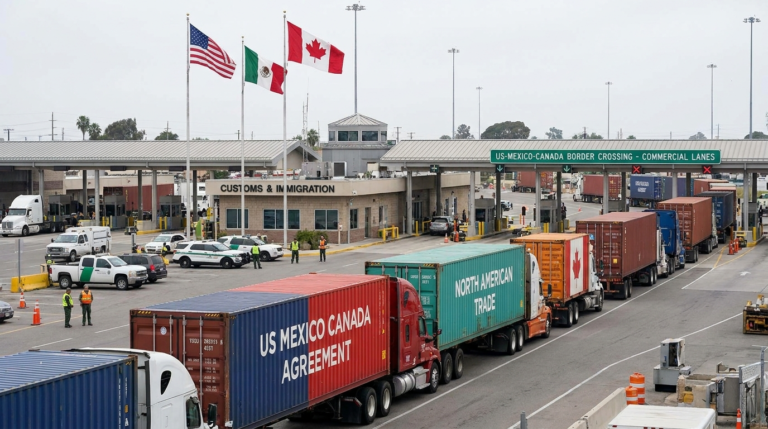
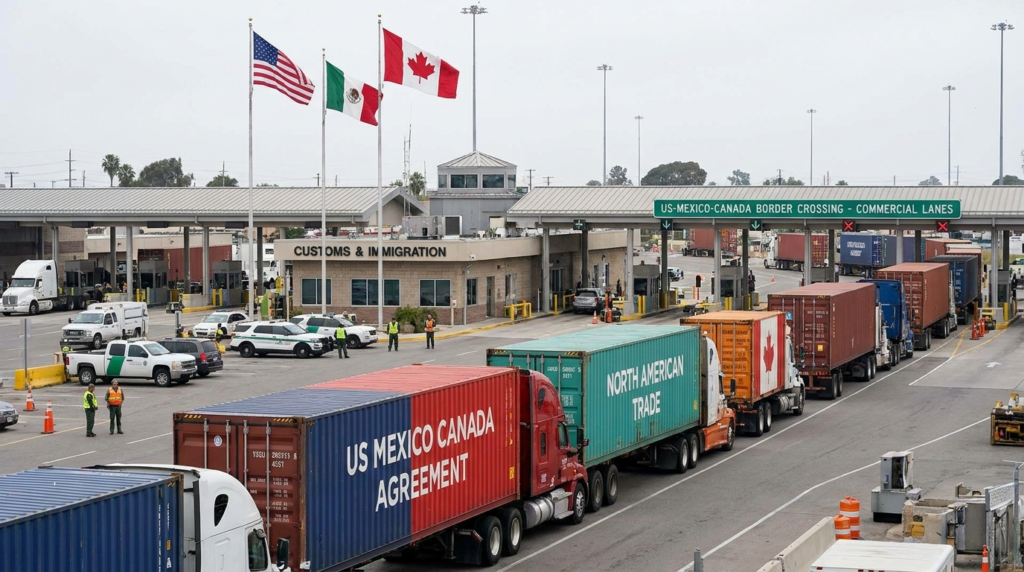
July 1, 2026 was supposed to be a formality. Instead, it became the day USMCA renewal died in its original form. The Trump administration told Canada and Mexico it would not sign off on extending the United States-Mexico-Canada Agreement for another 16 years, the option built into the treaty’s own review clause. This USMCA renewal decision is the clearest signal yet that Washington wants a different deal, not the same one running on autopilot.
USMCA doesn’t collapse because of this. It survives, technically, “pending resolution of these issues,” according to the joint review language released this week. But the shape of that survival changed overnight. Rather than locking in a new multi-decade term, the three countries now enter a cycle of annual reviews that will run for the next 10 years. If Washington, Ottawa and Mexico City can’t reach unanimous agreement on a full renewal at any point along the way, the deal automatically expires on July 1, 2036.
President Trump signed USMCA into law in 2018, replacing NAFTA, and called it “the best and most important trade deal ever made by the USA.” That framing didn’t survive contact with his second term, and the USMCA renewal fight now underway shows just how far the administration has drifted from that original praise. By June, Trump had cooled visibly, telling reporters, “I don’t know that I’m going to renew it,” and adding a blunter line that circulated widely: “We don’t need anything that Canada has. We don’t need anything that Mexico has, but they need everything that we have. And they have to treat us better.”
US Trade Representative Jamieson Greer laid out the administration’s formal case. “Workers are still watching their jobs leave,” Greer said. “Manufacturing jobs continue to move south of the border. Companies continue to exploit massive wage disparities between the United States and Mexico. The same broken incentives remain in place.” Greer also said the administration “will continue to engage with Mexico and Canada to address the Agreement’s shortcomings,” language that frames this as a pause, not a breakup.
Greer met Wednesday with Canadian minister Dominic LeBlanc as part of the review. The US and Mexico are already several rounds into bilateral talks that started before the deadline. The first ran May 28-29 in Mexico City, on economic security and rules of origin for industrial goods. The second ran June 16-17 in Washington, covering agriculture and a “level playing field.” A third round is set for the week of July 20 in Mexico City, expected to move into detailed contract language. Canada and the US have not yet started their own bilateral track.
Why It Matters
USMCA renewal isn’t just a legal technicality. It underwrites roughly $2 trillion in annual trade among the three countries, and the fate of USMCA renewal now shapes investment decisions from Michigan auto plants to Mexican maquiladoras. Cars, auto parts, agricultural goods, energy and manufactured components cross these borders daily under rules that assumed long-term stability. That assumption is now gone, at least for the next decade.
The administration’s stated reason comes down to numbers it doesn’t like. The US ran a $46 billion trade deficit in goods with Canada and a $197 billion deficit with Mexico in 2025. A senior administration official put it plainly: trade deficits with both countries “shot up during the Biden administration,” and USMCA “does not operate to control the deficit like the president intended.” That’s the crux of the USMCA renewal fight. Washington believes the current rules let too much manufacturing and too many jobs drift south, without meaningfully narrowing the gap in goods trade.
There’s a second complaint buried in the deficit argument: tariff exemptions. USMCA-compliant goods move duty-free, and the administration has objected to that carve-out, arguing it blunts tariffs imposed elsewhere in Trump’s trade policy. Companies that structured supply chains around USMCA compliance to dodge tariffs are exactly the behavior the White House wants to stop rewarding.
Businesses are already adjusting. The Peterson Institute for International Economics has mapped which US states and product categories stand to lose the most if the relationship keeps deteriorating, with automotive-heavy states like Michigan and Texas topping that list. Mexico’s investment climate is showing strain: foreign investment is down roughly 10% year over year. Canada’s labor market took a harder hit, losing more than 100,000 full-time jobs in the first two months of 2026, a number officials have linked directly to trade uncertainty.
None of this means the USMCA renewal question is closed for good. The deal stays in force. Tariff-free trade continues, for now, under existing terms. But “for now” is doing a lot of work in that sentence, and every business that ships across these borders knows it.
Expert Analysis
The Center for Strategic and International Studies mapped six possible paths for USMCA renewal before the deadline hit. Three now look realistic. The first is what CSIS calls a “painful extension”: talks stretch into late 2026 or further, concentrated on autos, energy, China-related rules and enforcement, with Mexico and Canada conceding ground on rules of origin to keep the deal largely intact.
The second is exactly what happened this week: serial annual reviews, no full deal in 2026, the agreement staying alive but under constant renegotiation pressure that discourages any 10-year investment bet on North American manufacturing. The third is bilateral fragmentation, where Washington strikes separate deals with Mexico and Canada instead of one trilateral framework. A senior US official has already floated that outcome.
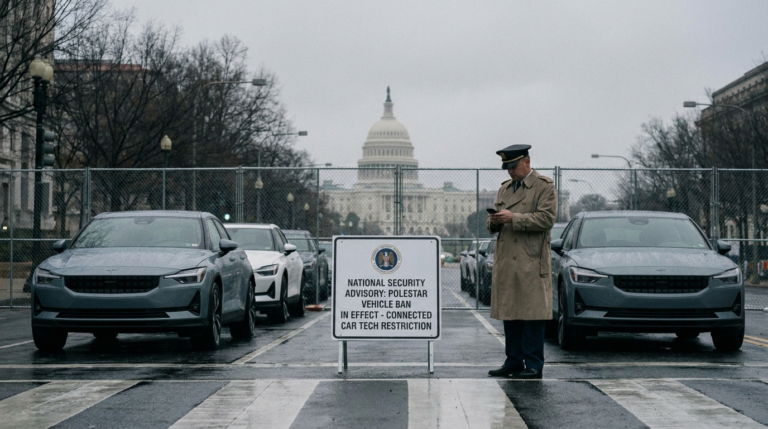
The Brookings Institution has focused specifically on the auto sector, where the stakes are highest. Current rules require 75% of a passenger vehicle or light truck’s value to originate in North America to qualify for duty-free treatment. The Trump administration reportedly wants that raised to 82%, with half of the total value required to come from the US specifically, not just North America broadly.
Boston Consulting Group has warned that pushing the threshold too high could backfire. If North American content rules get too strict, some automakers might shift production of cheaper components outside North America entirely rather than absorb the compliance cost, the opposite of what the policy is trying to achieve. “It’s not a small lift,” BCG noted, “and because it’s not a small lift, there might be some unintended consequences.”
Analysts widely agree on one point: uncertainty is now the defining feature of doing business across these three borders while USMCA renewal remains unresolved, regardless of which of the three CSIS scenarios eventually plays out. Companies can’t plan five years out when the rules might change every twelve months.
Market Impact
Markets didn’t panic over the stalled USMCA renewal, but they moved. The Mexican stock market actually posted the region’s second-biggest weekly gain, a reaction that looks less like relief over the trade fight and more like relief that trade tensions didn’t escalate into something worse. No new blanket tariffs, no immediate withdrawal, just a slower, grinding review process. Investors seem to be pricing this as manageable friction, not a rupture.
The peso tells a more complicated story. Mexico is the largest export market for its own manufacturers and the anchor of the country’s nearshoring boom, the wave of companies that relocated production to Mexico specifically to stay inside USMCA’s tariff-free zone. Prolonged uncertainty tied to the USMCA renewal process puts direct pressure on that boom, and on the currency that reflects it. Foreign investment already pulling back 10% year over year is the clearest early signal.
Automakers are the sector to watch most closely. General Motors and its North American suppliers now face a stretch of genuine uncertainty over sourcing rules, just as the rules-of-origin fight over that 75%-to-82% threshold heats up. CNBC reported automakers and parts suppliers are already flagging rising costs and shelved investment decisions tied directly to the unresolved review. A vehicle platform designed five years ago around 75% regional content doesn’t become compliant with an 82% rule overnight. Retooling supply chains takes years and real capital.
Canada’s currency and labor market are absorbing a separate kind of pressure. With more than 100,000 full-time jobs lost in early 2026, and US-Canada bilateral talks not yet started, Canadian officials have less clarity than their Mexican counterparts about what comes next. The market signal so far is that investors are treating this as a slow-burn renegotiation, not a trade war reboot. That read could shift fast if the Canada track stalls or tariff threats escalate.
Frequently Asked Questions
What happens to USMCA now that it wasn’t renewed?
USMCA remains legally in force. It does not expire immediately. Instead, it enters a mandatory cycle of annual reviews for the next 10 years. If all three countries don’t agree to a full 16-year renewal at some point during that window, the agreement automatically terminates on July 1, 2036.
Why did Trump refuse to renew USMCA?
The administration’s central complaint is the trade deficit, $46 billion with Canada and $197 billion with Mexico in 2025. Officials, including USTR Jamieson Greer, argue the deal failed to bring manufacturing jobs back to the US and that tariff exemptions for USMCA-compliant goods undercut the administration’s broader tariff policy.
Will tariffs go up on Canadian and Mexican goods immediately?
Not immediately. Existing USMCA terms, including duty-free treatment for compliant goods, stay in place while negotiations continue. The risk is longer-term: if talks stall or a country pulls out of future reviews, tariff protections built into the current deal could erode over time.
What comes next in the USMCA renewal process?
USMCA renewal talks continue on a bilateral track. The US and Mexico hold a third round of negotiations the week of July 20, 2026, in Mexico City, following earlier rounds in May and June. The US and Canada have not yet begun their own formal bilateral track, though Greer and Canadian minister Dominic LeBlanc met this week as part of the broader review.
Conclusion
USMCA renewal was never guaranteed, and few expected the process to unravel quite this publicly. A president who once called this deal the best trade agreement in American history spent his second term souring on it in full view, and the treaty he signed in 2018 is now headed into a decade of year-by-year uncertainty instead of the clean 16-year extension its own text anticipated.
The USMCA renewal deal isn’t dead. It’s in limbo, which for businesses depending on it might be worse. A dead deal at least gives companies a clear signal to plan around. A deal stuck in perpetual review gives them a calendar of deadlines that keep resetting. The next real test comes July 20, when US and Mexican negotiators sit down again in Mexico City, with Canada still waiting for its own seat at the table.
Sources
- CNBC — U.S. won’t renew USMCA, will review trade pact with Canada and Mexico
- NBC News — Trump won’t renew USMCA, toppling one of the last pillars of stability in global trade
- The Hill — Trump administration won’t renew USMCA in current form, trade rep says
- Washington Post — Trump ignores deadline for extending USMCA, seeks improved deal
- Al Jazeera — If USMCA is not renewed, analysts expect uncertainty for businesses
- CBC News — U.S. declines to extend CUSMA trade deal with Canada, Mexico
- CSIS — USMCA Review 2026: Six Scenarios for North America’s Future
- CNBC — U.S. auto industry faces more uncertainty without extension of USMCA trade deal
This article is for informational purposes only and does not constitute financial, investment, or trading advice. Market conditions can change rapidly, and readers should conduct their own research or consult a licensed financial advisor before making investment decisions. IFB Trend and its editorial team make every effort to ensure accuracy but do not guarantee the completeness or timeliness of the information provided.