








- Meta Platforms (NASDAQ: META) shares jumped 8.8%-10% on July 1, 2026, closing at $612.91, after Bloomberg reported the company is building a cloud business called Meta Compute.
- Meta Compute will reportedly sell two things: hosted access to Meta’s AI models, including its new Muse Spark models, and raw GPU compute capacity rented by the hour.
- The move sets Meta up as a direct rival to Amazon Web Services, Microsoft Azure, and Google Cloud, and to neocloud providers like CoreWeave and Nebius.
- CoreWeave fell roughly 10-14% and Nebius dropped 12-17% the same day, as investors weighed Meta turning from customer to competitor.
- Vital Knowledge founder Adam Crisafulli said the plan answers long-standing worries that Meta was “building way more capacity than it could ever use internally.”
- Meta Compute is reportedly led by infrastructure chief Santosh Janardhan, Meta Superintelligence Labs head Daniel Gross, and Meta president Dina Powell McCormick.
What Happened?
Meta Platforms stock closed up 8.8% on Wednesday, July 1, 2026, after Bloomberg reported the company is developing a new cloud computing business internally called Meta Compute. Shares touched an intraday gain of roughly 10%, hitting $619 before settling at $612.91 by the close, according to Investing.com data carried on Yahoo Finance. The single-day move added close to $149 billion in market value to a stock that had been lagging the S&P 500 for most of the year.
The Bloomberg report, citing people familiar with the matter, said Meta Compute is being built to sell the company’s surplus AI computing capacity to outside businesses. That’s a sharp pivot in framing. For two years, Meta’s AI infrastructure spending has been treated by Wall Street as a cost center — a bet on internal products like the Meta AI assistant and Llama models. Meta Compute reframes that spending as a revenue opportunity instead.
According to the report, Meta is weighing two distinct paths to monetize its data centers. The first, a “Model-as-a-Service” offering, would let outside developers pay to query AI models — including Meta’s recently launched Muse Spark models — hosted on Meta’s own servers. That’s the same basic idea behind AWS Bedrock, where Amazon lets developers rent access to a menu of AI models without managing the underlying hardware.
The second path is more direct: renting out raw, bare-metal GPU capacity by the hour, the same business model that made CoreWeave one of the fastest-growing infrastructure companies of the past three years. TechCrunch, citing the same Bloomberg reporting, said Meta Compute would be led by Santosh Janardhan, Meta’s head of infrastructure, alongside Meta Superintelligence Labs leader Daniel Gross and Meta president Dina Powell McCormick.
Meta declined to comment when reached by multiple outlets, and the company has not confirmed the plans publicly. But the framing lines up with comments Mark Zuckerberg made in May, when he told CNBC that a Meta cloud computing business was “definitely on the table” as a way to get a return on the company’s superintelligence push.
Why It Matters
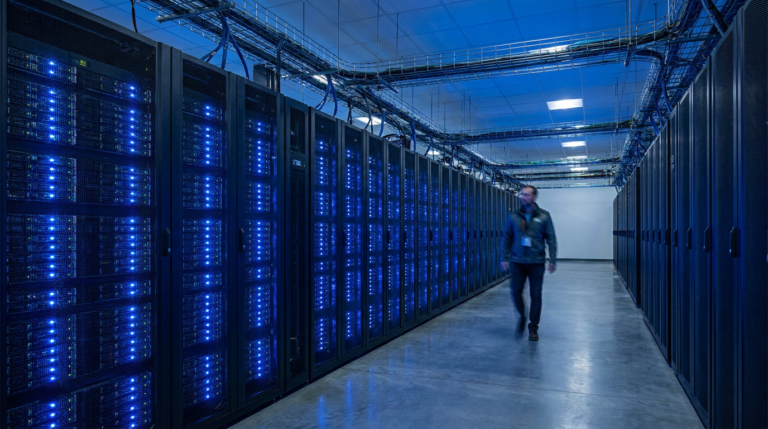
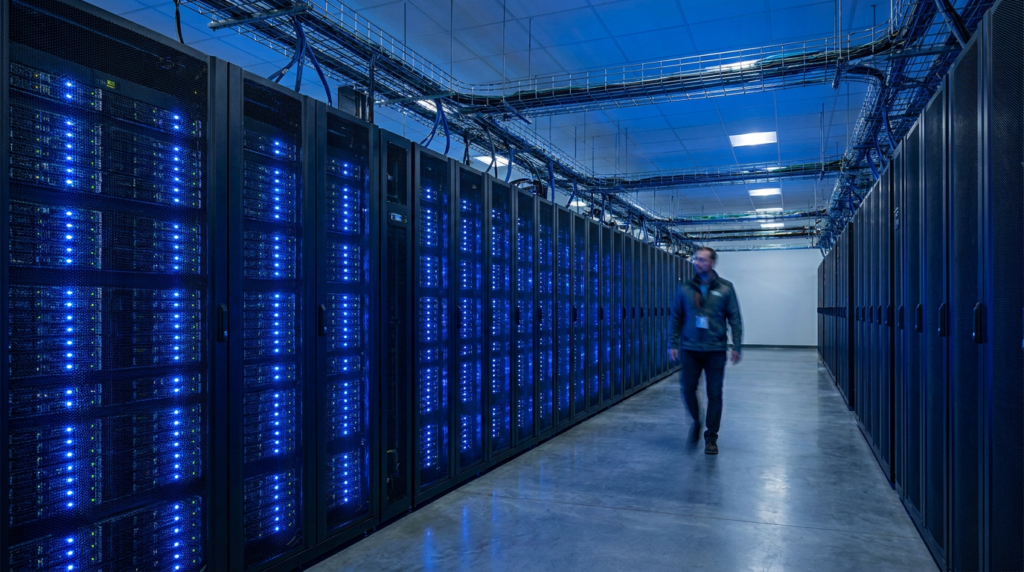
Meta has committed roughly $182.9 billion to AI infrastructure spending in the coming years, according to the company’s own securities filings. That includes massive builds in Richland Parish, Louisiana, and a data center in Ohio that Zuckerberg has said will be the size of Manhattan. None of that capacity has, until now, been positioned as something Meta could sell rather than just use.
Unlike Google or OpenAI, Meta hasn’t shown much external revenue from its own AI products. The company doesn’t break out Meta AI or Llama revenue in its earnings reports, and executives have mostly talked about internal productivity gains rather than a standalone AI business line. Meta Compute would change that story. It gives Meta a way to turn idle GPU cycles into a revenue line without waiting for its own AI assistant or model business to catch up with rivals.
The timing also matters. Meta isn’t the first infrastructure owner to make this pivot. SpaceX, through xAI, signed a deal in May with Anthropic to buy out compute capacity at its Colossus 1 data center, and has since struck similar leases with Google and Reflection AI. Meta Compute follows the same logic: build enormous capacity, absorb the fixed cost, then sell what you don’t need at close to marginal cost.
That’s also why the news rattled the neocloud and chip trade. If Meta Compute succeeds, it adds a deep-pocketed new supplier of AI compute at a moment when investors were already nervous about whether GPU rental pricing can hold up. A hyperscaler with its own chips, its own data centers, and existing developer relationships doesn’t need outside capital or long lead times to compete — it just needs to open the tap.
Expert Analysis
Adam Crisafulli, founder of the research firm Vital Knowledge, laid out both sides of the trade in a note to clients the morning the story broke, as reported by Yahoo Finance and Investing.com. On the bullish case, Crisafulli wrote: “Meta has been one of the heaviest spenders (in terms of capex/revenue) and many feared it was building way more capacity than it could ever use internally, so this external cloud business will help monetize all that infrastructure, bolstering revenue, margins, and cash flow.” He added that “since the industry in aggregate still seems to be capacity constrained, this Meta compute infrastructure will likely be quickly utilized by others.”
But Crisafulli also flagged the bear case. “The formation of an external cloud platform is a tacit admission from mgmt. that it overbuilt capacity and/or is falling short on its own internal AI model initiatives,” he wrote, comparing it to xAI’s own move to sell capacity to outside customers rather than reserve it entirely for Grok. His firm’s overall read: “The Meta news is great for that company specifically, but negative for sentiment toward pick-and-shovel providers (and it could weigh on other hyperscalers/neocloud companies too).”
Wall Street’s sell-side response to the neocloud selloff was more measured than the stock price action suggested. Rosenblatt reiterated its Buy rating and $250 price target on CoreWeave even as the stock dropped double digits. Evercore ISI told clients there should be no near-term impact on CoreWeave’s existing business with Meta even if the Meta Compute reporting proves accurate, arguing that GPU demand remains “robust and diversified” across hyperscalers, frontier labs, and enterprise customers — not concentrated enough in Meta alone to justify the size of the selloff.
Market Impact
The clearest losers on the day were the neocloud names most directly exposed to Meta as a customer. CoreWeave shares fell as much as 10.5% to 14%, trading down to roughly $87-$89, according to Benzinga Pro data. That’s notable because Meta accounts for close to $35 billion of CoreWeave’s roughly $100 billion backlog as of the first quarter, and the company holds a $21 billion agreement with Meta running through December 2032. If Meta starts filling its own demand — or worse, competing for CoreWeave’s other customers — that backlog concentration becomes a real risk instead of a strength.
Nebius, which has a Meta compute deal worth up to $27 billion over five years, fell even harder, dropping between 12% and 17% depending on the intraday snapshot. IREN, another AI infrastructure name with hyperscaler exposure, slid around 6.5%. Micron Technology, a major supplier of memory chips used in AI servers, dropped more than 10% on the same read-through, as investors reassessed how much new memory demand the industry buildout will actually need if hyperscalers increasingly serve each other. Even Nvidia dipped roughly 2%, a sign the market was pricing in some risk to the broader AI capex cycle rather than treating this as Meta-specific news.
Meta itself was the standout winner. The stock’s roughly 8.8%-10% single-day gain ranks among its sharpest moves of 2026, and it came at a moment when META had been underperforming the S&P 500 for much of the year. GuruFocus data pegged Meta’s GF Value at $812.17 against a trading price near $626, implying the stock was still undervalued by close to 23% even after the jump — though that model doesn’t account for how much of Meta Compute’s eventual revenue is speculative at this stage.
AI Perspective
Meta Compute is really a story about who owns the physical layer underneath the AI race, not just who builds the best model. Chips depreciate fast, data centers take years to build, and land and power are the real bottlenecks in 2026 — not algorithms. A company sitting on more compute than it needs has leverage whether or not its own AI products win.
That logic explains why Meta, SpaceX/xAI, and other infrastructure-heavy players are converging on the same move at nearly the same time. Selling AI models as a service, the way AWS Bedrock does, lets a company monetize its research even when its own consumer AI products lag behind ChatGPT or Gemini. Selling raw compute, the CoreWeave model, monetizes the hardware regardless of whose models run on it.
The open question is whether “capacity constrained,” the phrase Crisafulli used to describe the current AI compute market, holds through 2027. If it does, Meta Compute slots into a market with more buyers than sellers and gets absorbed quickly, exactly as bulls expect. If AI compute demand cools even modestly, a hyperscaler-turned-supplier adds new capacity at the worst possible time for neocloud providers that built their entire business model on scarcity pricing.
Frequently Asked Questions
What is Meta Compute?
Meta Compute is the internal name Bloomberg reported for Meta’s plan to build a cloud computing business that sells the company’s surplus AI computing capacity to outside customers, including hosted access to Meta’s AI models and raw GPU capacity.
Why did Meta Platforms stock jump 10%?
Investors responded positively because Meta Compute would turn the company’s roughly $183 billion in AI infrastructure spending — previously viewed purely as a cost — into a potential new revenue stream, addressing long-standing concerns that Meta had overbuilt data center capacity relative to its internal needs.
How does Meta Compute compare to AWS Bedrock?
One part of Meta Compute, the Model-as-a-Service option, would work much like AWS Bedrock: developers pay to access AI models, including Meta’s Muse Spark models, that run on Meta’s own infrastructure rather than their own servers.
Why did CoreWeave and Nebius stock fall on the Meta Compute news?
CoreWeave and Nebius both depend heavily on Meta as a customer, with contracts worth $21 billion and up to $27 billion respectively. Meta Compute raises the risk that Meta becomes a direct competitor in GPU rental instead of just a client, which pressured both stocks down double digits on July 1.
Conclusion
Meta hasn’t confirmed Meta Compute publicly, and the company declined to comment when reporters asked. Everything currently known comes from Bloomberg’s sourcing and the market’s reaction to it. But Zuckerberg had already told CNBC in May that a cloud business was “definitely on the table,” so Wednesday’s report reads more like confirmation of a known direction than a total surprise.
What happens next depends on details Meta hasn’t released: pricing, which models get hosted, how much raw capacity actually gets set aside for outside customers versus Meta’s own model training. Until those numbers show up, Wednesday’s 10% pop and the neocloud selloff that came with it are both bets on a story that’s still being written.
- Yahoo Finance / Investing.com — “Meta Platforms stock closes 9% higher on cloud business plans”
- Benzinga — “CoreWeave Stock Drops Sharply on Report of Meta AI Cloud Business”
- TechCrunch — “Meta, like SpaceX, looks to turn excess AI compute into cash”
- GuruFocus — “Meta (META) Shares Surge 10% on New Cloud Computing Business Announcement”
- Yahoo Finance — “CoreWeave and Nebius shares slide after Meta cloud expansion report”
This article is for informational purposes only and does not constitute financial, investment, or trading advice. Market conditions can change rapidly, and readers should conduct their own research or consult a licensed financial advisor before making investment decisions. IFB Trend and its editorial team make every effort to ensure accuracy but do not guarantee the completeness or timeliness of the information provided.