









Key Takeaways
- The S&P 500 closed Friday June 26 at 7,354.02, down nearly 2% for the week, as technology stocks led a broad market retreat.
- The Nasdaq Composite fell 4.6% for the week, its worst five-day stretch in months, posting its fifth consecutive losing session.
- Reports that OpenAI is considering delaying its IPO to 2027 due to SpaceX’s weak post-debut performance spooked AI-related stocks across the board.
- Bank of America’s three-hike Fed forecast added rate pressure on growth stock valuations, accelerating the tech-to-defensive rotation.
- The Dow Jones hit a record 52,655 in mid-week before pulling back, with JPMorgan’s $50B buyback and Micron’s blowout earnings providing pockets of strength.
What Happened?
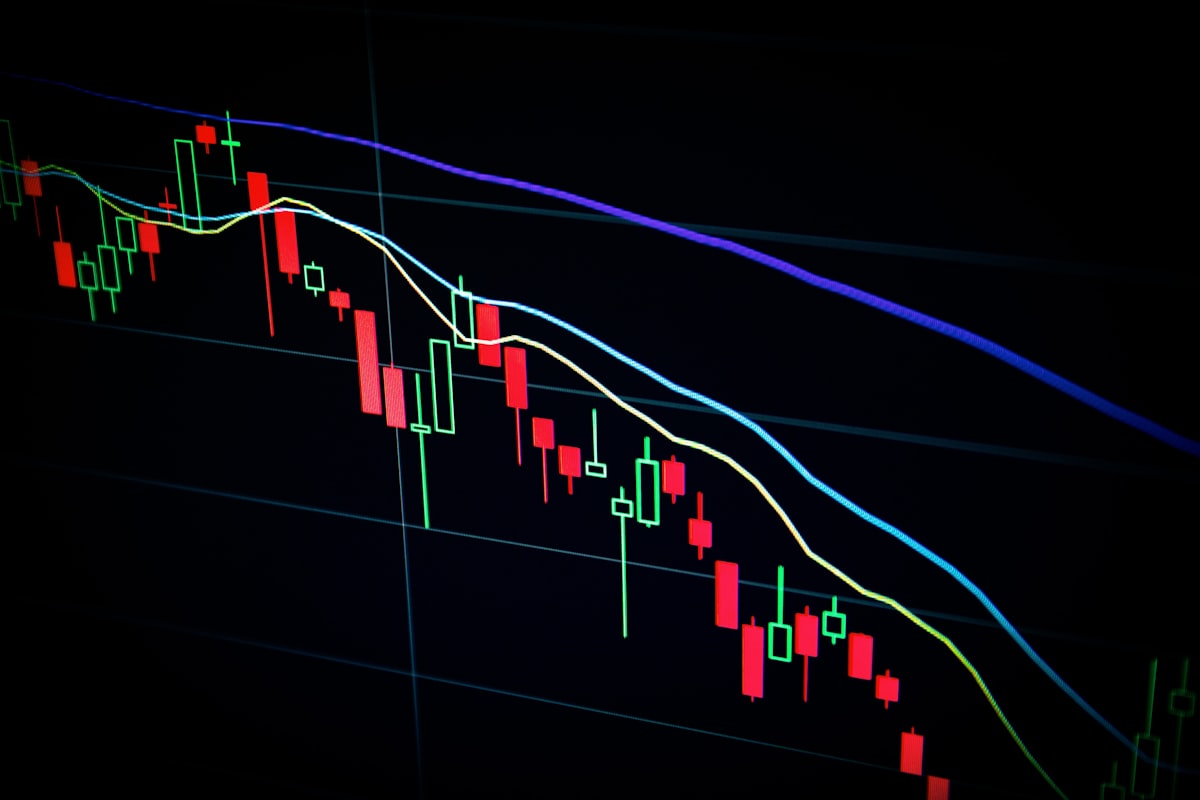
The S&P 500 ended a turbulent week on June 26 at 7,354.02, having shed nearly 2% over five sessions as a confluence of rate fears, AI valuation uncertainty, and sector rotation hammered the technology-heavy indices. The Nasdaq Composite fared worse, dropping 4.6% for the week and recording its fifth consecutive session of losses — a string of consecutive declines not seen since the market volatility of early 2025.
The sharpest single catalyst was a report that OpenAI is considering pushing its long-anticipated initial public offering from 2026 into 2027. The reason cited was SpaceX’s disappointing stock performance following its debut, which spooked OpenAI’s leadership about market reception for high-valuation AI companies. The report hit at a moment when investors were already questioning whether AI-related equities had run too far too fast, and the selling cascaded quickly through the sector.
Adding fuel to the fire was Bank of America’s hawkish pivot. The bank’s forecast for three Fed rate hikes in 2026 — published mid-week — reinforced the case for rotating out of long-duration growth stocks and into more defensive positions. Rate hikes compress the present value of future earnings, hitting high-multiple technology names disproportionately.
Chip stocks bore the brunt of the selling. Despite Micron’s extraordinary Q3 2026 earnings — which saw revenue quadruple to $41.46 billion — the broader semiconductor index struggled to maintain momentum as macro concerns overwhelmed company-specific strength.
Why It Matters
A 4.6% weekly decline in the Nasdaq is not catastrophic in isolation, but the nature of this week’s selling is worth examining carefully. The move was not driven by a single shock — a bank failure, a geopolitical event, or a policy mistake. It was driven by a reassessment of risk premiums across an entire sector that has been the primary engine of market returns for the past three years.
The S&P 500’s artificial intelligence-exposed companies — Microsoft, Nvidia, Alphabet, Meta, Amazon — have collectively added trillions in market capitalization since late 2023 on the expectation that AI would rapidly transform their revenue models. That expectation has not been wrong, but the valuation multiples embedded in those expectations are sensitive to interest rate assumptions. When rates rise, multiples compress. That math is reasserting itself.
The OpenAI IPO delay story matters beyond OpenAI. If the world’s most anticipated AI company chooses to stay private longer because public market investors aren’t offering fair value for high-growth AI businesses, it signals a cooling in enthusiasm that could affect the entire AI investment narrative. Private market valuations and public market reception are not independent — one informs the other.
The contrast between the Nasdaq’s pain and the Dow’s relative resilience is telling. As covered in last week’s Dow Jones record report, the 30-stock blue-chip index hit 52,655 earlier in the week before pulling back, driven by financials and industrials. That divergence captures the rotation narrative precisely: money moving from growth to value, from tech to traditional economy.
Expert Analysis
Technical analysts note that the S&P 500’s close at 7,354 holds above its 50-day moving average, which currently sits near 7,200. As long as the index stays above that level, the correction remains orderly and well within the context of a longer-term uptrend. A break below 7,200 would signal more serious technical deterioration and likely draw further selling.
Fundamental analysts are more divided. Bears argue that the S&P 500’s forward price-to-earnings ratio — still elevated near 22x — leaves little margin for error if Fed rate hikes compress multiples and earnings growth disappoints. With BofA calling for 75bp of tightening, even modest multiple compression could erase gains that took months to build.
Bulls counter that the earnings backdrop remains robust. Micron’s blowout results, JPMorgan’s $50 billion buyback announcement, and Microsoft’s continued revenue beat track record all point to a corporate earnings cycle that is not yet showing the cracks you’d expect if a recession were imminent. As long as earnings growth continues to compound, short-term multiple compression should be temporary.
Goldman Sachs’ equity strategy team maintained its year-end S&P 500 target of 7,800, arguing that the current weakness is a buying opportunity in quality names that have sold off indiscriminately with the rest of the sector.
Market Impact
The S&P 500 tech selloff has specific sector-level consequences worth tracking. Semiconductor stocks, which had been trading at premium multiples on AI demand expectations, are the most exposed to the dual pressure of multiple compression and IPO market uncertainty. Nvidia, the sector’s benchmark stock, pulled back from its recent highs even as its fundamental AI chip business continues to grow at extraordinary rates.
In contrast, the financial sector held up comparatively well. The prospect of Fed rate hikes is a tailwind for bank net interest margins, and JPMorgan’s $50 billion buyback — announced following its strong performance in the Fed’s annual stress test — signalled management confidence in sustained earnings power. Wells Fargo and Bank of America also drew interest as rate-sensitive beneficiaries.
Healthcare and consumer staples — the traditional defensive safe harbors in uncertain markets — also outperformed relative to the S&P 500. Eli Lilly continued to attract capital on the strength of its GLP-1 drug franchise, building on its 7% surge on EU drug approval news from the prior week.
Looking ahead, Q2 2026 earnings season begins in mid-July, with major banks reporting first. Markets will scrutinize management commentary on rate outlook, consumer health, and AI capital expenditure plans for clues about where the S&P 500 goes from here.
- Who: Nasdaq, S&P 500, OpenAI, Bank of America, tech sector broadly
- What: Nasdaq fell 4.6% for the week; S&P 500 lost nearly 2%
- When: Week ending June 26, 2026
- Where: U.S. equity markets; global indices followed
- Why: OpenAI IPO delay fears, Fed rate hike forecasts, tech multiple compression
- Impact: Rotation from tech to defensives; chip stocks hit hardest
Featured Snippet — What happened to the S&P 500 this week?
The S&P 500 fell nearly 2% in the week ending June 26, 2026, closing at 7,354.02, while the Nasdaq dropped 4.6% as tech stocks sold off sharply. Reports of OpenAI delaying its IPO and Bank of America’s forecast of three Fed rate hikes drove investors to rotate from technology into defensive sectors.
Frequently Asked Questions
Why did the S&P 500 fall this week?
The S&P 500 fell nearly 2% on a combination of factors: reports that OpenAI is delaying its IPO, Bank of America’s forecast of three Fed rate hikes in 2026, and a broad rotation out of technology stocks into defensive sectors like healthcare and financials.
Is the Nasdaq in a correction?
The Nasdaq fell 4.6% for the week but has not yet entered official correction territory (typically defined as a 10% decline from recent highs). However, five consecutive down sessions signal meaningful selling pressure that investors should monitor closely.
Why is OpenAI delaying its IPO?
Reports suggest OpenAI is concerned about public market reception for high-valuation AI companies after SpaceX’s IPO delivered weak post-debut performance. The company may wait until 2027 for more favorable market conditions.
What is the S&P 500 support level?
The S&P 500’s 50-day moving average near 7,200 is a widely watched support level. A close below that level would signal more serious technical deterioration and likely prompt additional selling.
Should investors buy the S&P 500 dip?
Goldman Sachs maintains its year-end S&P 500 target of 7,800 and views current weakness as a buying opportunity in quality names. However, investors should assess their own risk tolerance and timeline before acting.
Conclusion
The S&P 500’s weekly slide and the Nasdaq’s sharper 4.6% decline reflect a genuine reassessment of growth stock valuations in a rising-rate environment — not panic, but a rational repricing of risk premiums. The OpenAI IPO delay story crystallised a concern that had been building: AI-related equities may have priced in more optimism than the near-term fundamentals can sustain.
That does not mean the AI investment story is over. Micron’s extraordinary earnings, Qualcomm’s pursuit of Tenstorrent, and Microsoft’s continued cloud dominance all confirm that the structural demand for AI compute is real and growing. But investors may need to accept that the path higher for AI stocks will be choppier in a 4% Fed funds rate world than it was when rates were near zero.
Sources
- CNBC: Stock market today live updates
- St. Louis Fed FRED: S&P 500 data
- Yahoo Finance: S&P 500 and Nasdaq slide
- Community research: Reddit, X, and financial forums
Disclaimer: This article is for informational purposes only and does not constitute financial advice. Always conduct your own research before making investment decisions.